
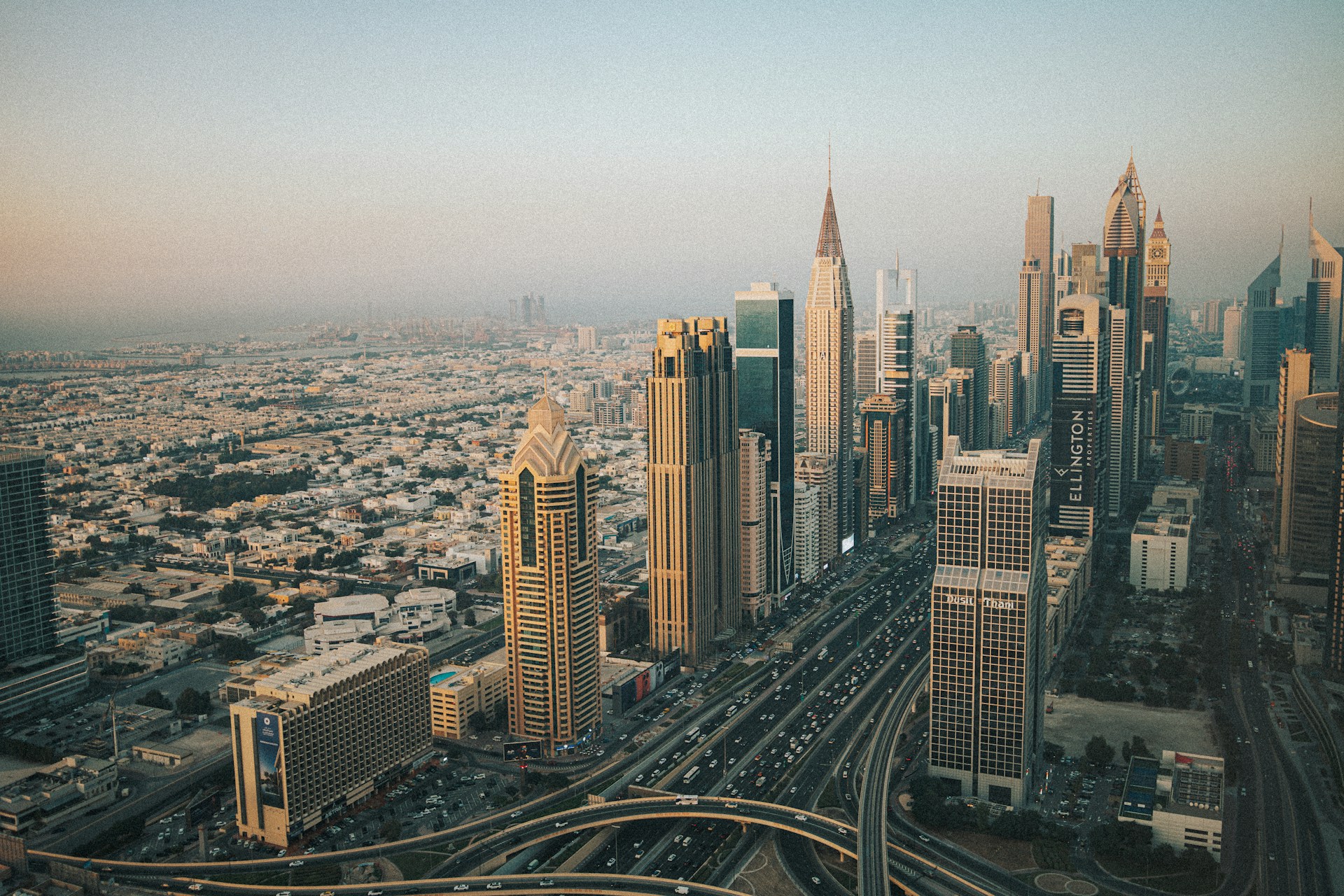
Dubai Real Estate Market: Late Summer 2025 Dynamics
By the end of summer 2025, the Dubai real estate market has maintained strong activity, although growth momentum is gradually leveling out.
The average price reached AED 1,664 per sq. ft. (+2.4% month-on-month, +16.3% year-on-year), more than double the 2020 market low.
Despite moderating growth, Dubai’s property market remains highly liquid and structurally resilient.
Transaction volume declined by 7.3% compared to July, yet remained exceptionally high for the end of summer at 18,655 transactions. This level of activity has persisted for several consecutive months, confirming high liquidity and overall market resilience.
What Is Happening in the Market
- Off-plan remains the primary growth driver, accounting for approximately 76% of all transactions, up from around 60% previously.
- Mortgage activity is at a historic peak with 4,689 loans registered, marking the second-highest figure on record.
- In 2025, more than 400 new projects have already been launched, representing approximately 102,000 units and a 42% year-on-year increase.
- Apartments dominate new supply, accounting for around 93% of launches, reflecting sustained demand from both end-users and investors.
Pro Tip
In a market where off-plan dominates, focus on developers with proven delivery records rather than headline launch incentives.
Areas with the Highest Activity
The highest concentration of transactions continues to be observed in Business Bay and Jumeirah Village Circle, largely driven by the sheer volume of apartment inventory in these districts.
In the secondary market, Dubai Marina and Jumeirah Lake Towers (JLT) consistently demonstrate strong performance, with transactions occurring across both premium and mid-market segments.
Calculate Your Property Revenue
Get a quick estimate of your property's potential income
Key Takeaways
Market growth is stabilizing. Activity remains high, but momentum is shifting from broad-based demand to more selective purchasing.
Off-plan is gaining preference. Buyers are prioritizing flexibility over completed units that offer limited incentives.
New projects are launching faster than absorption. Developer competition is intensifying as supply pipelines expand.
Mortgage financing remains a stabilizing force. High mortgage activity continues to support liquidity in the secondary market.
Buyer behavior is becoming more pragmatic. Liquidity, predictable returns, and strong locations are increasingly favored over image-driven luxury assets, reflected in a declining share of high-end deals.
Construction costs and delivery timelines are increasing. Developers are increasingly announcing project completions for 2030–2031, extending investment horizons.